ENTRY – 003
In entry number 2 I’m going to share with you a life changing paradigm shift I had recently. Its a paradigm shift i had after reviewing Grant Cardone’s 10X rule. Specifically Chapter 6.
A reflection on myself while re studying Chapter 6 of Grant Cardone’s 10X Rule Changed How I See Accountability
You have probably had a moment in your life before like i had recently, where things hit you like a brick, and the answer you have beed seeking is so simple you may be embarrassed you had been acting the way you had been. That’s what happened to me, I realized something fundamental: I’m not a victim of my circumstances. I’ve been a volunteer.
I spent years building something that felt incomplete. I was good at what I did. I sat across from clients, I understood their goals, I mapped out strategies, and I executed plans that looked good on paper. But something gnawed at me, a feeling I couldn’t quite shake. A gap between the conviction I felt about planning and the conviction I could actually deliver through the tools I was given.
The Blame Game Trap
Let me be honest about where I was: I was stuck in the blame game. Not loudly, not vindictively, but quietly, stuck.
I was finding problems with everything:
- The products? Not performing as promised.
- The platforms? Limited by mediocre offerings.
- The corporate leadership? Seemingly content with the products are “good enough.”
- The market conditions? Always working against us.
- The underperforming strategies? Well, that’s what happens when you’re constrained by what you can distribute.
There was always someone else to blame. There was always a reason. There was always an excuse.
“You will never rise above the limitations you place on yourself. The only thing between you and what you want is your commitment.” – Grant Cardone
I wasn’t fully hearing that. I’d get little pieces of it but I was too busy pointing fingers.
“At some point, you have to take complete responsibility for your life and your results. Blame is the victim’s way of maintaining the status quo.” – Grant Cardone
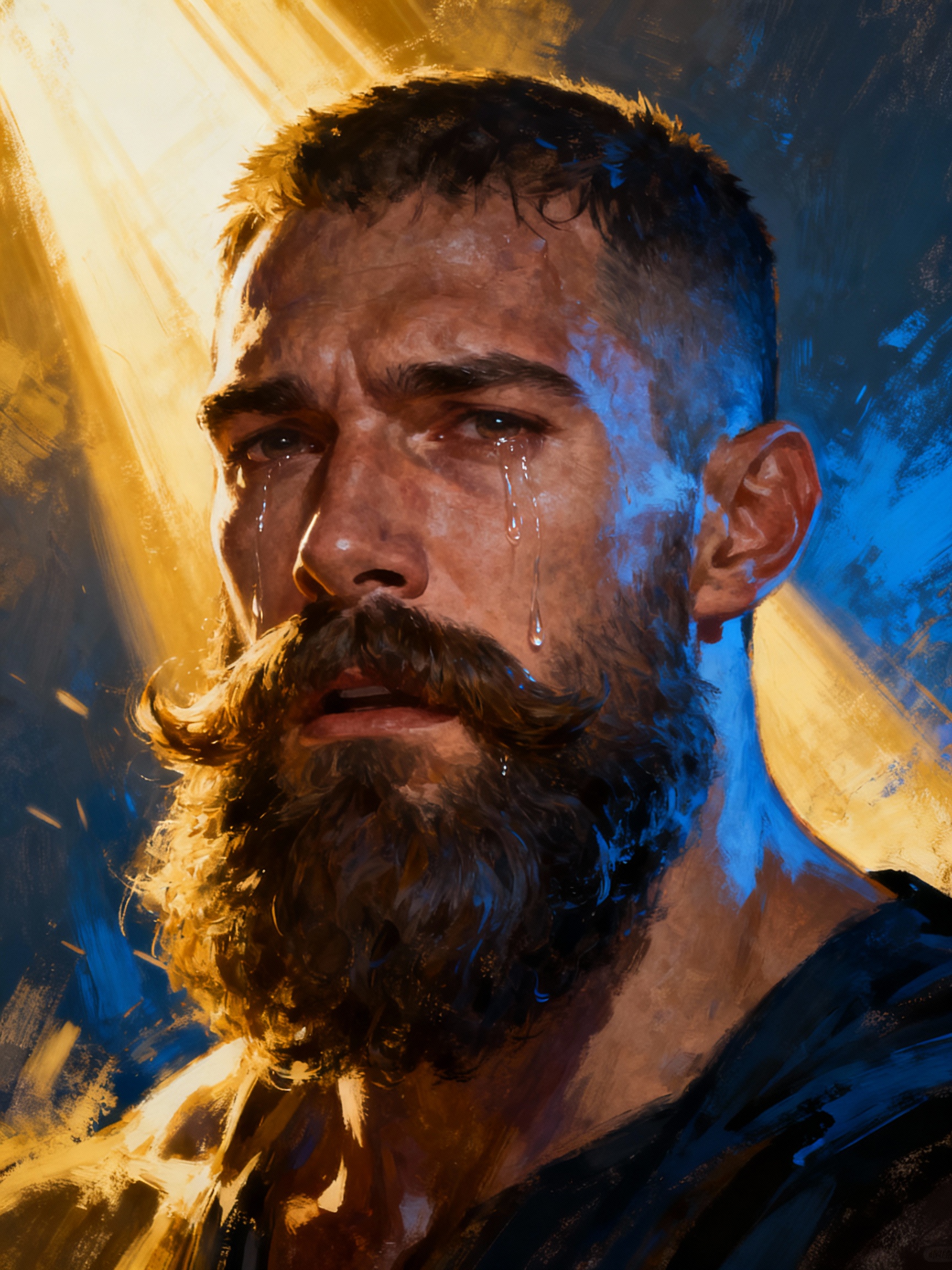
I was being a whiny cry baby about it—and I mean that in the most literal sense possible. I was complaining, excusing, deflecting. I was settling.
The Moment Everything Changed
When you hear these messages over and over again sometimes they fall on deaf ears, sometimes a little seeps in, sometimes you’re ready for the true message, and sometimes you look back and realize you have been influenced by it the entire time. What if I’m the problem?
Not “What if the system is broken?” Not “What if the products suck?” Not “What if I got unlucky?” The actual question: What’s inside of me and why do I feel this way?
That’s when it clicked.
I couldn’t control what the platform offered. I couldn’t control what leadership decided was “good enough.” I couldn’t control market movements and in that role I couldn’t control product design. I couldn’t control any of that.
But I could control the system I choose to be in. I could control what came out of my mouth. I could control whether I became a middleman defending products I halfway believed in or whether I became the architect of solutions I was 100% certain about.
“When you accept complete responsibility, you’ll find that you are more resourceful, more creative, and more capable than you ever thought possible.” – Grant Cardone
I’d be lying if I said it happened over night. The move to “complete responsibility” was a bit slow. There was a lot of time spent trying to hold on to the past. Maybe some of the feeling was disbelief. But deep down the seed of what I needed to do was always there.
Slowly I stopped blaming. I stopped complaining. I stopped pointing fingers at providers and platforms and products. Slowly, I picked up pace, until I looked at the only thing I actually controlled: myself.
And I asked: “What is the solution, what do I need to do different?“
The Work Nobody Wants to Do
The solution wasn’t sitting around waiting for the platform to change. It wasn’t hoping a new different firm would have better products. It wasn’t luck or timing or being in the right place at the right time.
The solution was work. Real work. The kind that nobody wants to do.
I needed to understand asset management, not just asset gathering. Those are completely different skill sets, different mindsets, different circles of competency. For the sake of full transparency, I had always had an interested in that other side of the business. For the 1st 10 years of my 20+ year career I dipped my toe into portfolio management with my own money. I had some wins and some losses, learning a ton. But when I decided to become accountable for a solution my efforts to grow intensified.
About 15 years ago (in 2010) I began devouring that side of the business, opening up to mentorship on trading and the markets instead of just selling. My involvement continued to grow as time went on: Reading books on the economy. Studying credentialed materials from well known and well respected associations. Running my own back tests. Developing advanced portfolio management concepts, tactical allocation strategies, factor investing, market structure—all of it. Every year this intensity increased. By 2015, it was all consuming. I wanted to know what I didn’t know. I wanted to fill every gap that could possibly allow my mentality to slip into victimization later.
Then I was ready to really begin, I beta-tested strategies with my own money. Real money. Money I was willing to lose because the learning was worth more than the capital. I studied what worked, what didn’t, why markets moved the way they did, how different asset classes behaved in various environments.
I worked relentlessly.
And here’s the thing about relentless work: It changes you. It changes how you talk. It changes what you’re willing to accept. It changes your standards because now you are the standard.
Full accountability. No gaps. No escape routes. No victim mentality.
The Challenge Nobody Sees Coming
“Taking full responsibility doesn’t eliminate challenges. It just changes the nature of them.” -Grant Cardone
Distribution was easy when I was selling what everyone else was selling. Fast food hamburgers—standardized, proven, repeatable, efficient. You don’t need to be a genius to move volume when you’re offering what’s already expected.
But a gourmet burger? A differentiated strategy built from scratch? Superior in concept but harder to scale? That’s a different challenge entirely.
Now I face a problem that actually matters: How do I get something genuinely better to the people who need it?
Distribution. Scale. Market penetration. Brand building. These are the new mountains.
And you know what? I prefer these challenges to the old victim mentality. Because these challenges are mine. They’re not someone else’s fault. They’re not constraints outside my control. They’re the natural progression of taking full responsibility for something you actually believe in.
“Your problems are a result of your thinking. Change your thinking, and you change your results.” -Grant Cardone
When I shifted from “How do I make the best of mediocre options?” to “How do I build and distribute something genuinely superior?”—everything changed.
This Is My Stand. This Is My Shove.
This new endeavor isn’t a reaction to my previous situation. It’s not born from bitterness or frustration or finger-pointing.
It’s born from radical responsibility.
I couldn’t control what products were on that platform. But I could control this: Whether I continued accepting mediocrity or whether I would do the work—the relentless, unglamorous, necessary work—to build something I actually believed in.
For most people, this looks unreasonable. Why leave a stable situation? Why take on that liability? Why build when you could buy? Why work that hard when you could coast?
Because I’m not interested in coasting. Because I realized that comfort and conviction are rarely found in the same place. Because the only way to clear my conscience was to take full control and full responsibility.
This whole endeavor, the strategies I’ve developed, the families I hope to serve, the future we’re building—this is my stand. This is where I stopped being a whiny cry baby and started being the type of person who is willing to accept complete responsibility for his results.
Is it harder than the previous model? Yes.
Is it riskier? Absolutely.
Is it required if I want actual freedom and actual alignment? 100%.
Cardone says: “You must commit to your dreams. You must commit to your vision. And most importantly, you must commit to believing in yourself.”
I’m all in. I’m committed. And I’m taking the responsibility that comes with that commitment.
The old challenges—explaining underperformance, defending mediocre products, pointing fingers at platforms—those are gone.
The new challenges—distribution, scale, branding—these are just getting started.
And I wouldn’t have it any other way.
The real question isn’t whether you can handle responsibility. It’s whether you’re willing to stop being a whiny cry baby and actually take it.
If you are, everything changes.
All views are personal and do not constitute advice or represent the firm.

Leave a Reply